
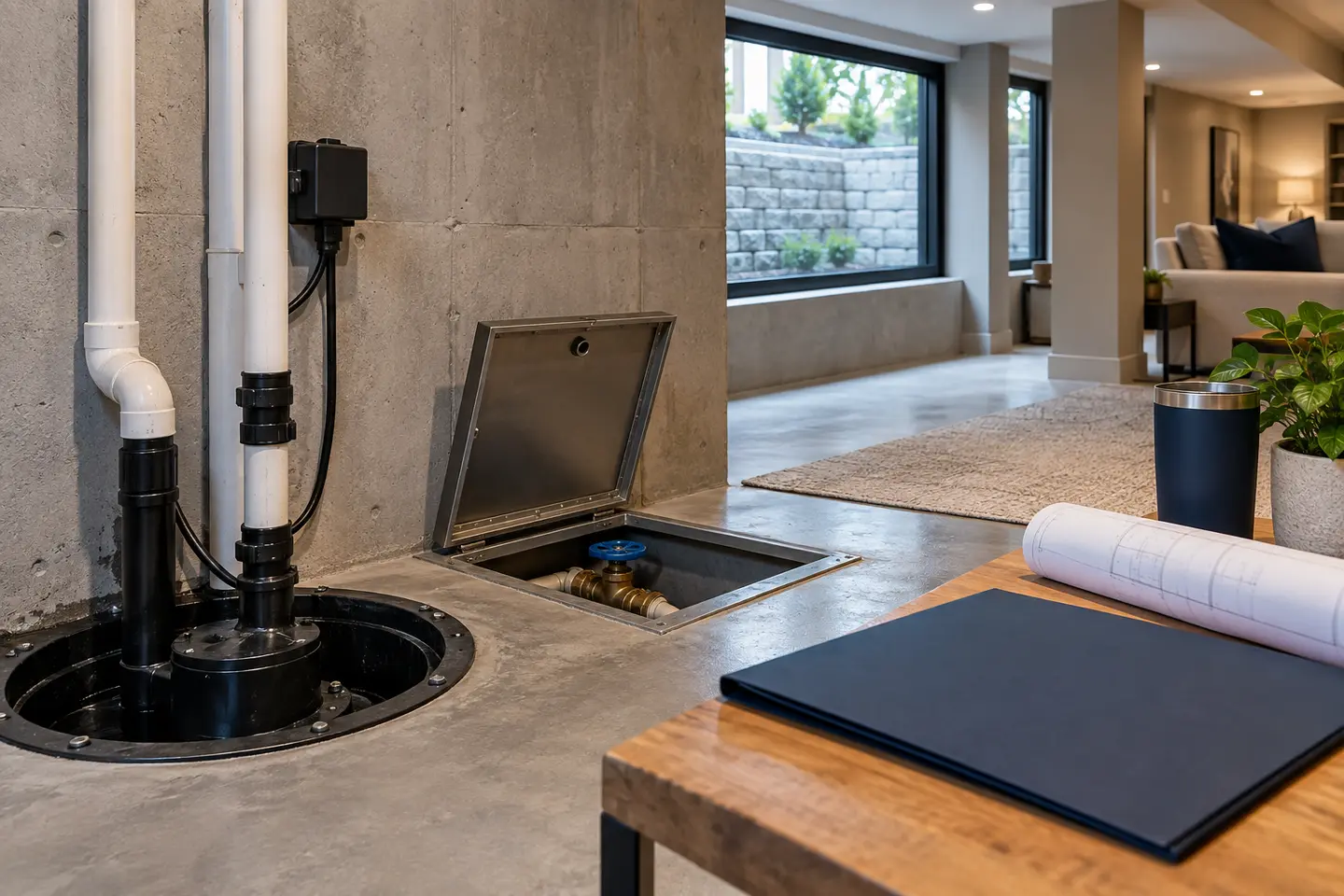
A current homeowner guide to Halton Region’s five basement-flooding subsidies, eligibility, permits, documentation and application planning.
Basement-water decisions are easier when the route, system and administrative requirements are separated. This guide explains the planning framework and the questions that still require property-specific confirmation. It does not diagnose a house from a description or replace the current Town of Oakville and Halton Region information.
Current 2026 subsidy amounts
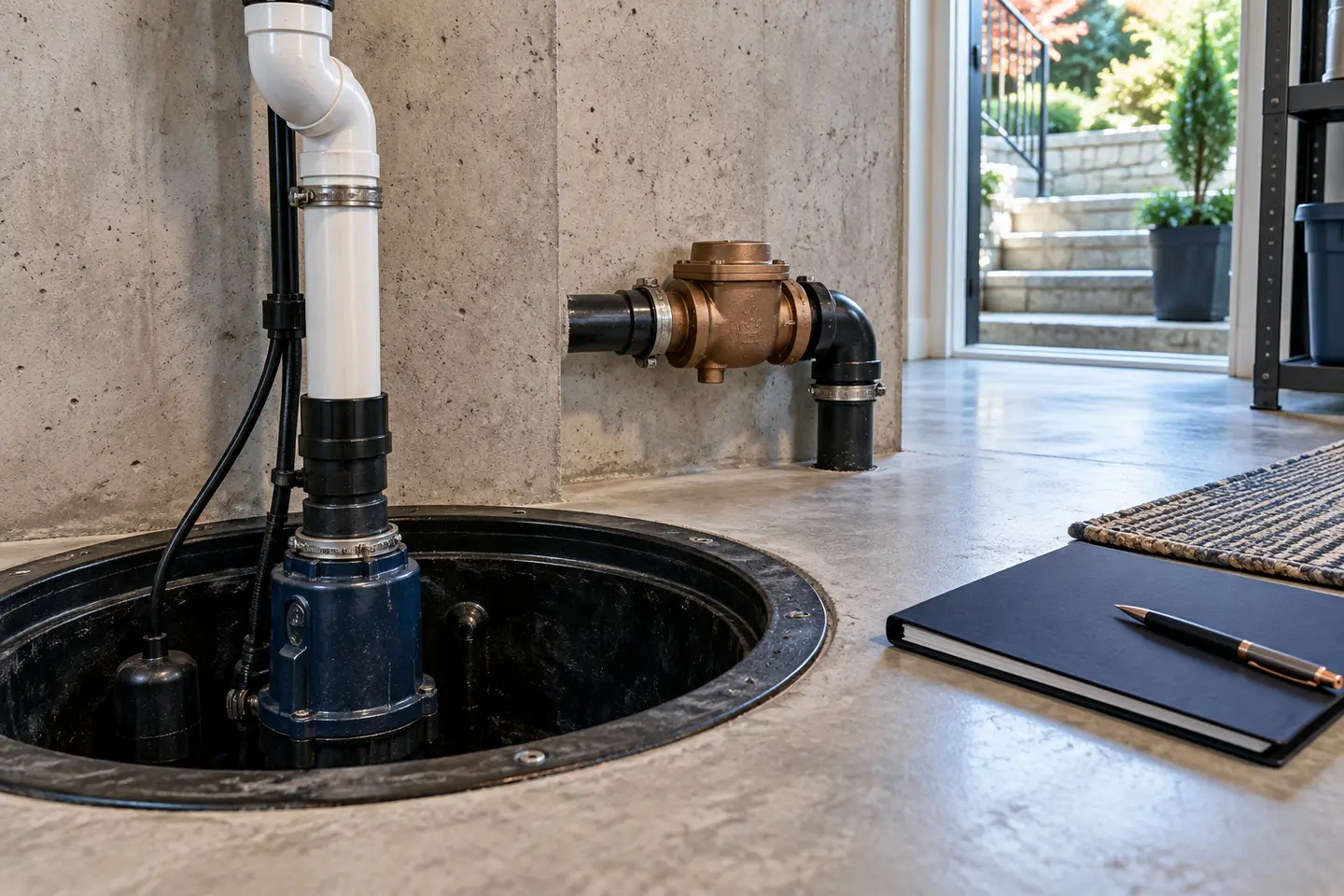
Halton Region’s published amounts updated in September 2025 remain current on the pages reviewed for this 2026 guide. For qualifying work completed after July 15, 2024, the listed caps are: 100% up to $6,500 for weeping-tile disconnection with sump-pump installation; 50% up to $1,600 for a backwater valve; 100% up to $900 for downspout disconnection; 100% up to $6,500 for exterior storm-drain disconnection; and 50% up to $4,000 for wastewater-lateral lining or repair.
A maximum is not a standard payment and should not be subtracted from a proposal as though it were guaranteed. The percentage, eligible invoice amount, property conditions, proof of the original connection and required inspection records determine the result. Costs outside the defined measure—such as unrelated renovation, broad landscaping changes or work completed outside the program rules—may remain entirely with the homeowner.
| Measure | Current published support | Key distinction |
|---|---|---|
| Weeping tile disconnect + sump | 100% up to $6,500 | Confirmed wastewater connection and compliant redirection required |
| Backwater valve | 50% up to $1,600 | Interior wastewater reverse-flow protection |
| Downspout disconnect | 100% up to $900 | Pre-existing wastewater connection must be proven |
| Exterior storm drain disconnect | 100% up to $6,500 | Qualifying below-grade drain redirection |
| Wastewater lateral repair | 50% up to $4,000 | Confirmed pipe defect and repair evidence |
Eligibility before construction
Program planning should begin before construction, even though the application is submitted after eligible work is complete. The property must be in Halton Region and connected to the municipal wastewater system, and the application generally must arrive within one year of the completed work. Measure-specific conditions then determine whether a Household Drainage Survey, qualified plumbing or drainage assessment, permit or other proof is required.
Ask the assessor to identify the existing connection that qualifies, the compliant destination after disconnection and the documents that will show both. If eligibility depends on a condition that is still concealed, treat it as unresolved until evidence is obtained. Starting work first and hoping that an invoice will be enough can leave an otherwise useful project outside the program.
Household Drainage Survey and assessments
Halton uses assessment evidence to connect a subsidy measure to a verified property condition. A Household Drainage Survey can document relevant stormwater connections, while a qualified plumber or drainage contractor may be needed for wastewater-lateral defects or other measure-specific findings. The exact accepted route depends on the program stream, so one inspection should not be assumed to satisfy every measure.
Keep the full report rather than only a verbal conclusion. Useful evidence identifies the address, date, accessible components, observed connection or defect, testing method and recommended correction. Where a camera inspection supports a lateral repair, retain the required before-and-after records. Where disconnection is proposed, preserve photographs that show the original arrangement and the completed compliant route.
Permits and final inspection
A subsidy and a municipal permit are separate decisions. Halton may require permit and final-inspection records as application evidence, while the Town of Oakville determines whether the particular sump, weeping-tile, plumbing, sewer, excavation or site-servicing work requires approval. A contractor’s invoice does not replace a permit when the permit is part of the required process.
Confirm who obtains the permit, who schedules inspection and which work must remain visible. For a new sump or backwater valve, closing the floor or finishing the area before inspection can create delay and rework. Retain the issued permit, inspection outcome and any approved drawing with the subsidy file rather than relying on an online status page that may be harder to retrieve later.
Invoices and application records
Paid invoices should identify the property, contractor, work date, measure, quantities and eligible labour and materials clearly enough to match the application. A single line such as ‘waterproofing work’ may not separate subsidized plumbing or drainage from unrelated wall finishes, cleanup or renovation. Request a detailed scope before work, then make sure the final invoice follows it and records approved changes.
Build one application folder containing the assessment, photographs, proposal, paid invoice, proof of payment, permit, final inspection and the current application form. Keep originals and a complete digital copy. If the work changed after concealed conditions were opened, include the written change and supporting evidence so the installed measure can still be followed from diagnosis through completion.
Common planning mistakes
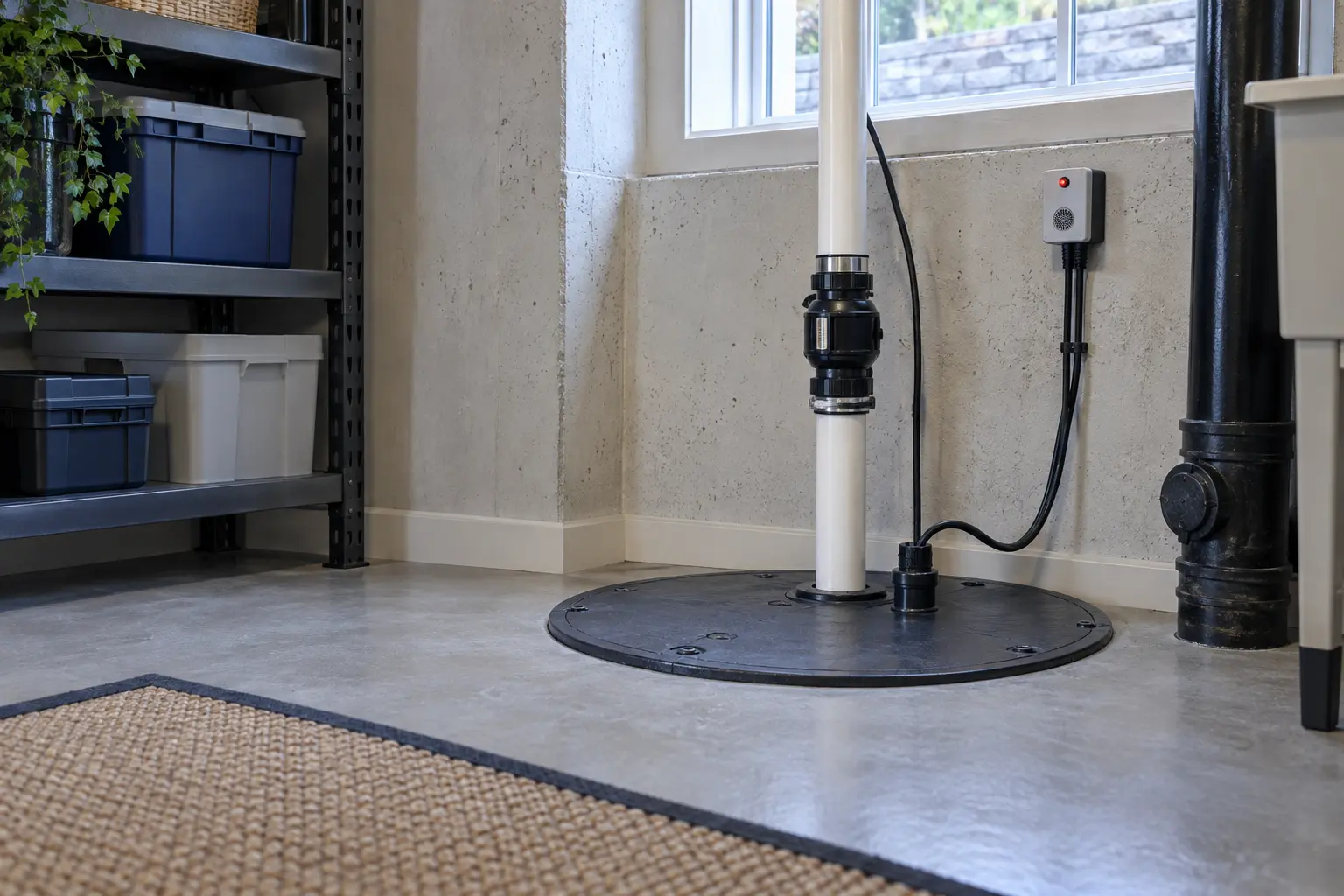
Common mistakes include relying on an old program summary, beginning work without proving the original connection, assuming every waterproofing cost is eligible, missing the one-year application window and concealing permit work before inspection. Another frequent error is treating two measures as interchangeable: a backwater valve addresses wastewater reverse flow, while a sump receives collected foundation drainage.
Before authorization, compare the current official page and application with the proposed scope line by line. Confirm the measure name, qualifying condition, percentage, cap, permit path, discharge route and evidence package. If an answer is uncertain, ask Halton Region or the Town before construction. Written confirmation is more useful than a remembered phone summary when the application is reviewed months later.
Turn the guidance into a property-specific plan
A subsidy-ready scope should be understandable without the program page beside it. It names the existing condition, the eligible measure, the new route or device, the permit responsibility and the records supplied at completion. If a proposal combines several projects, request separate quantities and prices so an ineligible finish or drainage improvement is not confused with the measure submitted to Halton.
Use the application deadline as an outside limit, not a target date. Review the file soon after final inspection while missing signatures, photographs or invoice details can still be corrected. Keep a copy after submission and record any confirmation number. Program staff make the eligibility decision; the planning steps in this article improve the evidence but cannot promise approval or a particular reimbursement.
Before submitting, compare the final installed condition with the measure named on the application. Confirm that every required attachment is legible, dates and address match, and paid amounts are clear. If the official form or program page has changed since planning began, follow the current instructions and ask the Region how a transition rule applies.
What to document before requesting an assessment
- The first visible wet location and how the water spread
- Date, duration, rain, thaw, outage and plumbing conditions
- Visible cracks, windows, drains, pump equipment and alarms
- Finished areas or exterior features that limit access
- Earlier repairs, available permits and product information
- Questions about drainage destination, restoration and maintenance
Good notes do not require technical conclusions. Plain observations allow the assessor to compare several routes. Keep the original photographs and include a wider view so scale and location are clear. Do not create a safety risk to obtain a closer image.
Oakville and Halton checks
Check Oakville permit requirements against the actual work. The Town currently identifies FDC-area sump and weeping-tile work, shoring and excavation, sewer systems and site servicing among permit-triggering categories, while ordinary basement damp-proofing is listed differently. Halton subsidy measures have their own eligibility and documentation rules.
Review the current Town of Oakville permit guidance and Halton flood-prevention pages before construction or an application. Saved pages and old contractor material may show superseded amounts or requirements.
How to compare recommendations
Put each proposal beside the observed water route. Check whether it addresses one defect or a broader system, which side of the foundation it uses, where collected water goes, and what opening or excavation is required. Then compare restoration, permits, testing, maintenance and exclusions. A price comparison is only meaningful when those responsibilities are aligned.
Ask how unexpected concealed conditions will be handled. A proposal should identify the assumption, the evidence needed to change it, who can authorize additional work and how the price will be calculated. This protects the project from drifting after finishes are opened or buried drainage is exposed.
Maintenance after the work
Water-management components remain part of the home. Pumps should be tested according to their instructions; backup batteries and alarms need periodic review; valve access must remain clear; window wells and outlets should be kept free of debris; and changes in exterior grading or downspouts should not redirect water back toward the foundation.
Keep the final scope, approved changes, permits, inspection records, invoices, photographs and product information. Those records support maintenance and give a future assessor a clearer starting point if the water pattern changes.
Revisit the system after major exterior changes, basement renovations or equipment replacement. New paving, landscaping, additions, finished walls or altered drainage can change access and water movement. A later project should not disconnect, cover or redirect an installed component without confirming its purpose and destination.
Questions homeowners often ask
Can one photograph establish the repair?
No. It can show a visible condition but not the full concealed route, buried connections, structural stability or all access constraints.
Should I pick a system before an assessment?
Start with the symptom and desired outcome. The method should follow evidence from the property and a clear explanation of its limits.
Can two water problems happen in the same storm?
Yes. Foundation seepage, window entry, pump trouble and wastewater reverse flow can occur during the same weather event while requiring different measures.
Are official programs permanent?
No. Funding, eligibility, forms and program availability can change. Verify immediately before relying on a program.
Related Oakville resources
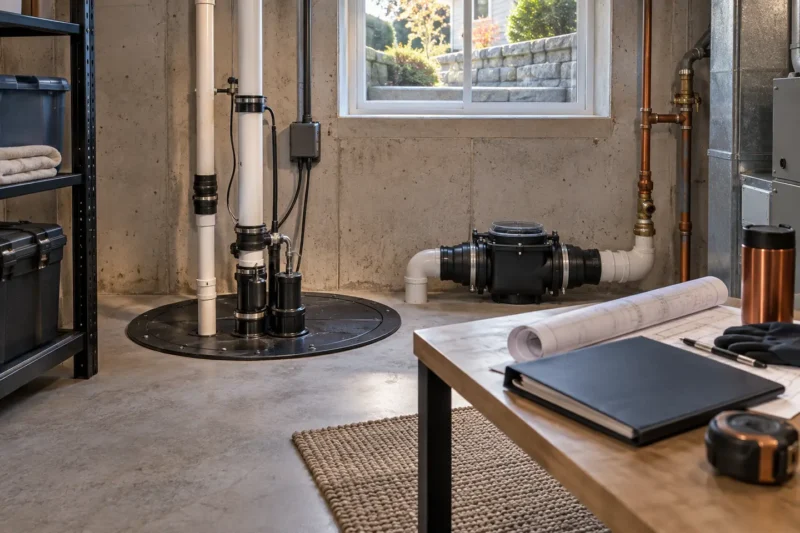
Oakville Subsidies
Halton Region currently offers measure-specific subsidies for eligible properties and completed work. Eligibility, proof, permits, invoices, inspections and deadlines matter; funding is not automatic.
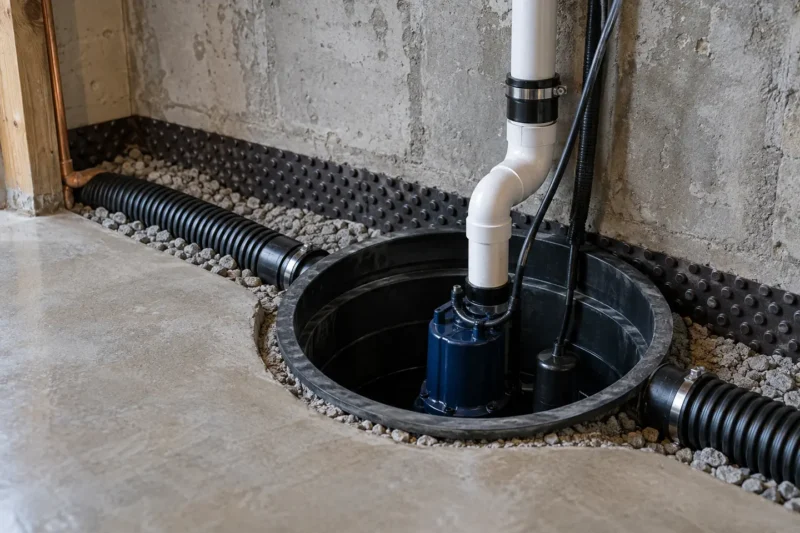
Weeping Tile Disconnect + Sump
Oakville weeping tile disconnection & sump pump installation planned around disconnecting foundation drainage from the wastewater system and redirecting it through a sump, access, drainage, permits and…
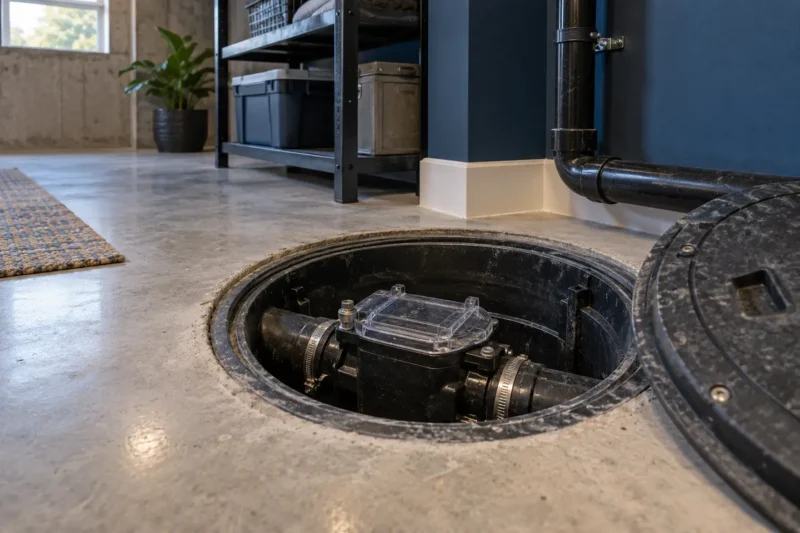
Backwater Valves
Oakville backwater valve installation planned around protection against reverse flow from the municipal wastewater sewer, access, drainage, permits and restoration.