
Foundation crack repair in Oakville is worth considering when the observed water pattern supports a crack as an entry point, not simply because a crack is visible. A darkened vertical line, mineral staining, a drip after rain, or a recurring wet area near the same wall can all be useful evidence. But water can travel behind finishes, along the wall-floor joint, or across the floor before it becomes visible. The goal is to identify where water is entering and how it is moving before choosing a repair method.
At Oakville Basement Waterproofing, we assess foundation crack concerns alongside access, drainage, finished-basement conditions, and other possible routes. A focused crack repair can be appropriate in the right circumstances, while other conditions may call for drainage work, waterproofing, window well correction, or a broader review.
What a leaking foundation crack can look like
A foundation-wall crack may be easy to see in an unfinished basement, but its relationship to water is not always obvious. Look for observations that connect the crack to a repeatable moisture pattern, especially after wet weather or snowmelt.
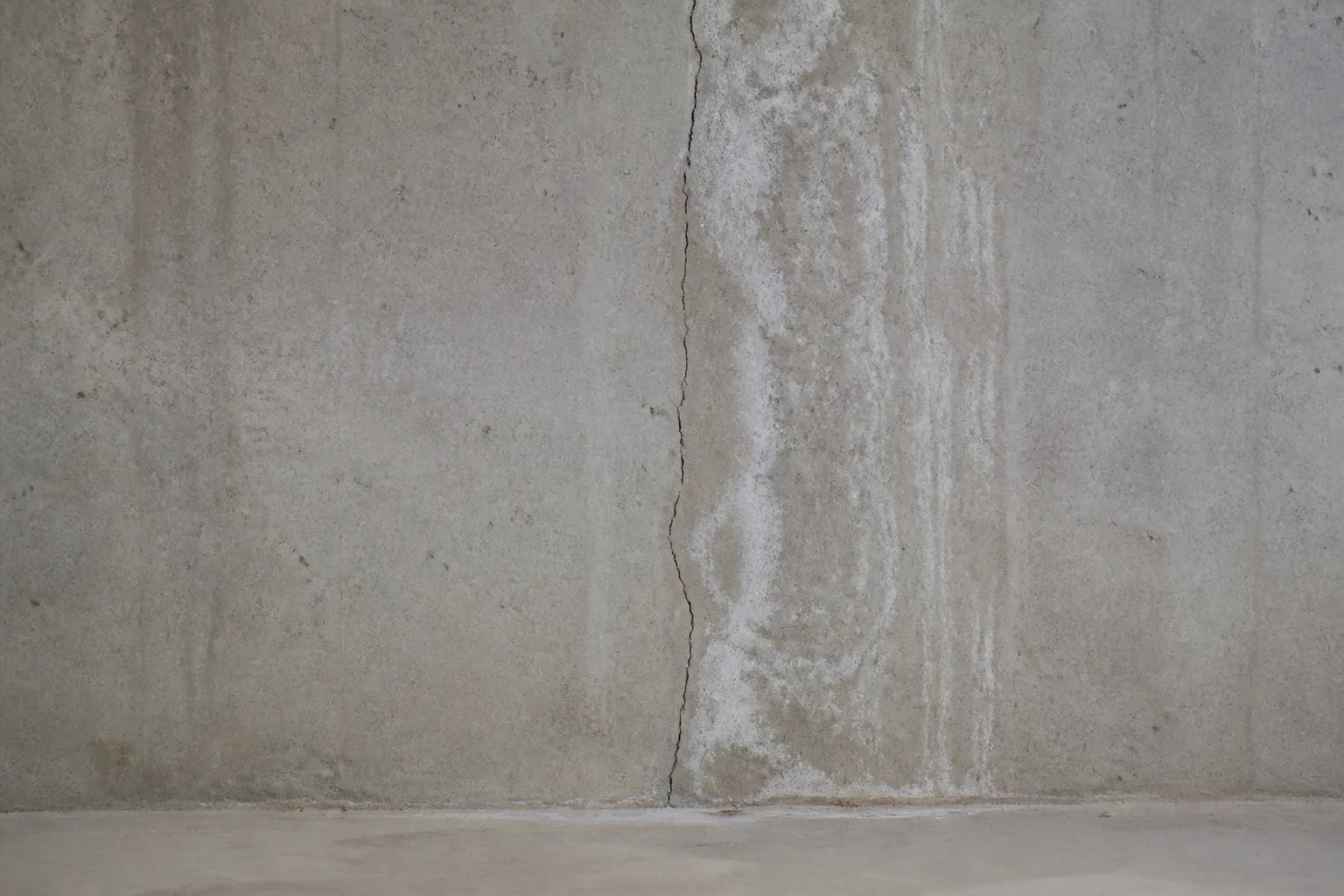
- A crack that becomes darker or damp after rain
- Mineral deposits or staining beside a vertical crack
- Water appearing near the same wall after prolonged wet weather
- A previous patch that has begun leaking again
- Swelling baseboards, staining, or damp drywall near a concealed crack
- Moisture that begins at a wall and later collects elsewhere on the floor
The first place you see a puddle is not always the entry point. Water can move behind drywall, follow a floor edge, or collect at a low spot in the basement. That is why the first damp mark, the height of staining, and the direction of spread are often more useful than the largest area of water.
Record the event before cleanup removes the evidence
Clear notes help distinguish a one-time event from a recurring route. If it is safe to do so, take photographs before cleanup and write down what happened in plain language. Avoid entering standing water near electrical equipment, touching energized equipment, or reaching into a sump pit.
Before an assessment
What to document after you notice water
Capture simple observations while they are fresh. You do not need to identify the cause before requesting an assessment.
- Note the date, approximate time, duration, and weather conditions.
- Record where water or staining first appeared and how it spread.
- Take one wide photo for context and a closer photo of visible cracks or staining when safe.
- Note whether the sump was running, an alarm sounded, or a power interruption occurred.
- List prior repairs and any known pump, drain, window-well, or drainage information.
- Identify finished walls, flooring, storage, or exterior features that could limit access.
Try to separate facts from conclusions. For example, “water appeared at the lower wall corner about ten minutes after heavy rain began” is a useful observation. “The weeping tile is blocked” is a possible explanation that requires confirmation.
Why rain timing matters for foundation crack repair in Oakville
Timing does not diagnose the source by itself, but it helps narrow the investigation. Water that appears during intense rainfall can have a different pattern from seepage that develops after several wet days. Water noticed during a power interruption, while a sump pump is operating, or after plumbing use may point to other components that also need review.
Nearby exterior conditions can matter as well. Roof runoff, downspout discharge, grading, paved surfaces, window wells, and places where water remains near the foundation can affect how much water reaches the wall. A visible crack can be a real entry point without being the only factor in the event.
For a broader explanation of storm-related water routes, see our guide to water in a basement after heavy rain.
A visible crack does not automatically define the repair
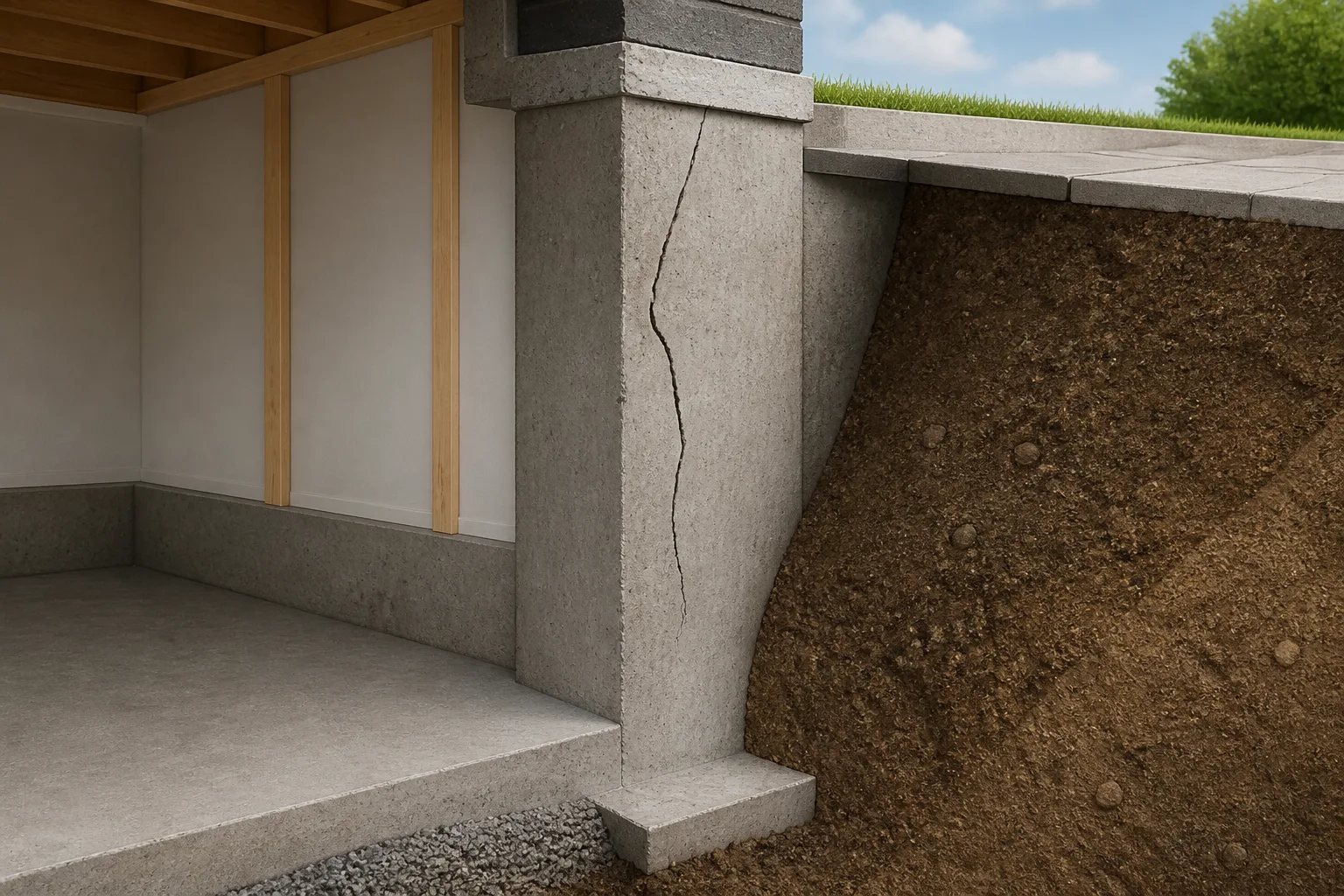
Foundation crack repair is intended to address water entering through a visible or concealed foundation-wall crack when the assessment supports that route. The practical approach may involve interior or exterior access, depending on the crack, wall construction, water pattern, and access conditions.
However, a crack is not proof that every wet condition came through that location. Water near a wall can also relate to a window well, a utility penetration, surface drainage, the wall-floor joint, foundation drainage, or another source. A backwater valve addresses wastewater reverse flow rather than groundwater entering through a foundation wall, while a dehumidifier can reduce indoor humidity without stopping an active leak.
These distinctions matter because different water routes call for different solutions. Our leaking foundation crack guide explains why the condition you can see should be connected to the wider water pattern before work is selected.
What a property assessment should review
A useful assessment follows evidence inside and outside the home rather than assigning every wet mark to the nearest crack. For foundation crack concerns, we consider the visible condition and the practical limits of what can be confirmed without opening finishes or investigating buried components.
Relevant details can include:
- The crack location, route, visible width, and nearby staining
- Whether the wall is finished or accessible
- The relationship between moisture and rain, thaw, plumbing use, or pump operation
- Wall-floor edges, penetrations, basement windows, and floor drains
- Existing sump equipment, accessible drainage components, and discharge routing
- Exterior grading, roof-water discharge, paving, landscaping, and window wells
- Earlier repairs, available permits, and records related to drainage work
In a finished basement, a narrow planned opening can sometimes provide more useful information than broad demolition. The proposal should make clear which finishes require removal, what access is assumed, and who is responsible for restoration afterward.
Key planning point
Do not choose a repair from a photograph alone
A photograph can document a crack, but it cannot confirm concealed water travel, buried drainage connections, structural significance, or the full access and restoration required. The repair scope should follow an on-site review of the water pattern and accessible conditions.
Interior access and exterior access solve different practical problems
Foundation crack repairs can be planned from the interior or exterior when evidence supports a crack-related water route. The appropriate approach depends on the crack, the wall, water movement, and what can safely and practically be accessed.
| Planning factor | Why it affects the scope |
|---|---|
| Finished basement walls | Drywall, insulation, flooring, and built-ins can conceal the crack and affect the access and restoration required. |
| Exterior obstacles | Gardens, decks, paving, steps, fences, utilities, and restricted side yards can affect exterior access and restoration. |
| Drainage conditions | A crack repair and a drainage correction address different parts of a water-management route and should not be treated as interchangeable. |
| More than one entry route | A visible crack may exist alongside a wet window well, wall-floor seepage, or another condition that needs its own defined scope. |
| Structural questions | Waterproofing addresses water management. It does not, by itself, establish why a crack formed or certify structural stability. |
For a closer comparison of where systems manage water and the access they require, read interior versus exterior basement waterproofing.
What should be clear in a foundation crack repair proposal
A clear proposal does more than name a repair. It should connect the work to the observed water route and state the boundaries of the scope. This makes it easier to compare two estimates fairly, especially when one includes selective access and another assumes excavation, drainage changes, or substantial restoration.
Before authorizing work, ask:
- What observations support the proposed repair method?
- Which conditions are confirmed, and which are assumptions that need further investigation?
- What interior or exterior access is required?
- Are drywall, flooring, landscaping, paving, or other restoration items included or excluded?
- Where will collected water discharge if drainage work is part of the scope?
- How will concealed damage or buried conditions be documented and approved if they change the work?
- What testing, maintenance information, and project records will be provided?
Cost is driven by the confirmed scope, not the service name. Crack location, access, foundation construction, finished-basement removal, exterior excavation, buried services, drainage connections, permits, disposal, and restoration can all affect the work. A small accessible crack repair should not be compared as though it were the same project as a broader waterproofing or drainage system.
Oakville permits, drainage routes, and records
Permit requirements depend on the final work. The Town of Oakville identifies some sump-pump work and weeping-tile repairs or changes in Foundation Drainage Collection System areas among projects that can require permits. Excavation, shoring, sewer-system work, and site servicing may also have permit implications. Ordinary damp-proofing is treated differently, so the address, scope, and current Town requirements should be confirmed before work begins.

Drainage changes also need a confirmed destination. Foundation drainage, sump discharge, wastewater piping, and municipal storm connections serve different purposes. Water should not be redirected toward the foundation, a neighbouring property, or an unapproved connection. Our overview of Oakville foundation drainage collection systems explains why property-specific confirmation belongs early in planning.
Keep photographs, proposals, invoices, permits, inspection records, and product information with the property file. Those records support future maintenance and give a clearer starting point if the water pattern changes after a major storm or later renovation.
When a crack repair should not be treated as the whole answer
A targeted repair is not a universal solution for every basement-water problem. If moisture appears at multiple walls, the wall-floor joint, a basement window, or a separate low area, each route should be evaluated on its own evidence. The same is true when the home has a separate sewer-backup risk or a sump concern.
Where the observed issue is broader than one crack, our basement flood-prevention assessment can help frame the review around the complete property water-management route rather than a single visible symptom.
The practical next step is to preserve the evidence, identify when and where water first appeared, and make sure the proposed repair explains the route it is intended to control. That approach helps prevent a visible crack from becoming either an overlooked cause or an overly narrow explanation for every wet-basement event.
Helpful answers
Frequently Asked Questions
Start with the water pattern
Tell us where water first appeared, when it occurs, and what drainage or pump equipment is already present so we can review the concern.