
To find the source of a basement leak in Oakville, start with the first place water or staining appears, then connect it to when the problem occurs. Rainfall, snowmelt, a running sump pump, plumbing use, or a sewer backup can point to very different water routes. The puddle you see is often where water collected, not necessarily where it entered.
At Oakville Basement Waterproofing, we provide wet and leaking basement repair based on the evidence at the property. A crack, a wet wall edge, a window well, and a failed drainage component do not call for the same scope. Identifying the route first helps avoid treating a visible symptom while leaving the underlying path unaddressed.
Start with the timing, not just the wet spot
The timing of a leak is one of the most useful clues. Make a simple record of the first time you notice water, the weather or household conditions at the time, and whether the pattern has happened before.
- During or soon after rain: This pattern can relate to surface water, window wells, foundation-wall openings, grading, or foundation drainage.
- After prolonged wet weather or snowmelt: Water pressure around the foundation and drainage performance may need closer review.
- When a sump pump runs or during a power interruption: The pump, pit, discharge route, backup protection, or drainage feeding the pit may be relevant.
- During plumbing use or with a floor-drain backup: The concern may involve wastewater reverse flow or a drain issue rather than water passing through the foundation.
- On dry days: Indoor humidity and condensation should be distinguished from active water entry. A dehumidifier can reduce humidity, but it does not repair an active leak.
Take photographs when it is safe to do so, including wider views that show the wall, floor edge, window, or equipment nearby. Avoid moving items before recording the first visible wet location if possible. For an active flood near electrical equipment, do not enter the area or handle electrical items.
Trace the visible water pattern indoors
Water can travel behind drywall, along framing, beneath flooring, or around the perimeter before it becomes visible. That is why a damp baseboard or a puddle in the middle of the floor is not conclusive proof of the entry point.
Look for the highest or earliest visible sign of moisture. A stain that begins higher on a foundation wall may suggest a different investigation than a recurring damp line where the wall meets the slab. Water below a basement window deserves a review of the window opening and exterior well. A narrow wet line at the floor edge can point attention to the wall-floor joint and the drainage conditions around it.
Useful observations to record include:
- Darkened concrete, peeling paint, efflorescence, or damp insulation
- Visible foundation cracks or moisture around pipe penetrations
- Wet flooring, baseboards, or finished-wall materials
- The height and extent of water marks on the wall
- Whether water appears at one area or along several sections of the perimeter
- Any earlier repair, renovation, or change in the pattern
Do not assume a visible crack explains every wet condition. A crack can be an important water route, while drainage, a window detail, or another opening contributes to the same event. Where a crack is the confirmed route, our foundation crack repair service addresses water entering through a visible or concealed foundation-wall crack.
Check exterior clues without guessing at buried systems
A basement leak often has exterior context. Walk around the property after conditions are safe and look for water collecting near the foundation, roof discharge directed toward the house, low areas beside paving, and water standing in a window well. Note accessible grading, downspout outlets, hard surfaces, gardens, and any location where runoff appears to collect.
A below-grade window well needs a path for water to drain away. Standing water, debris covering drainage stone, a low well edge, or runoff directed toward the opening can all be relevant. Our window well drainage and repair service is intended for confirmed standing-water or leakage concerns at below-grade basement windows.
Exterior observations are clues, not a complete diagnosis. Foundation drainage pipes, sump discharge routes, wastewater laterals, and municipal connections have different functions and may be concealed. Their route should be confirmed through suitable investigation, available records, and accessible components before changing a drainage connection.
Match the symptom to the possible water route
The same storm can expose more than one issue. The goal is not to select a method from a symptom alone, but to separate the likely routes that need investigation.
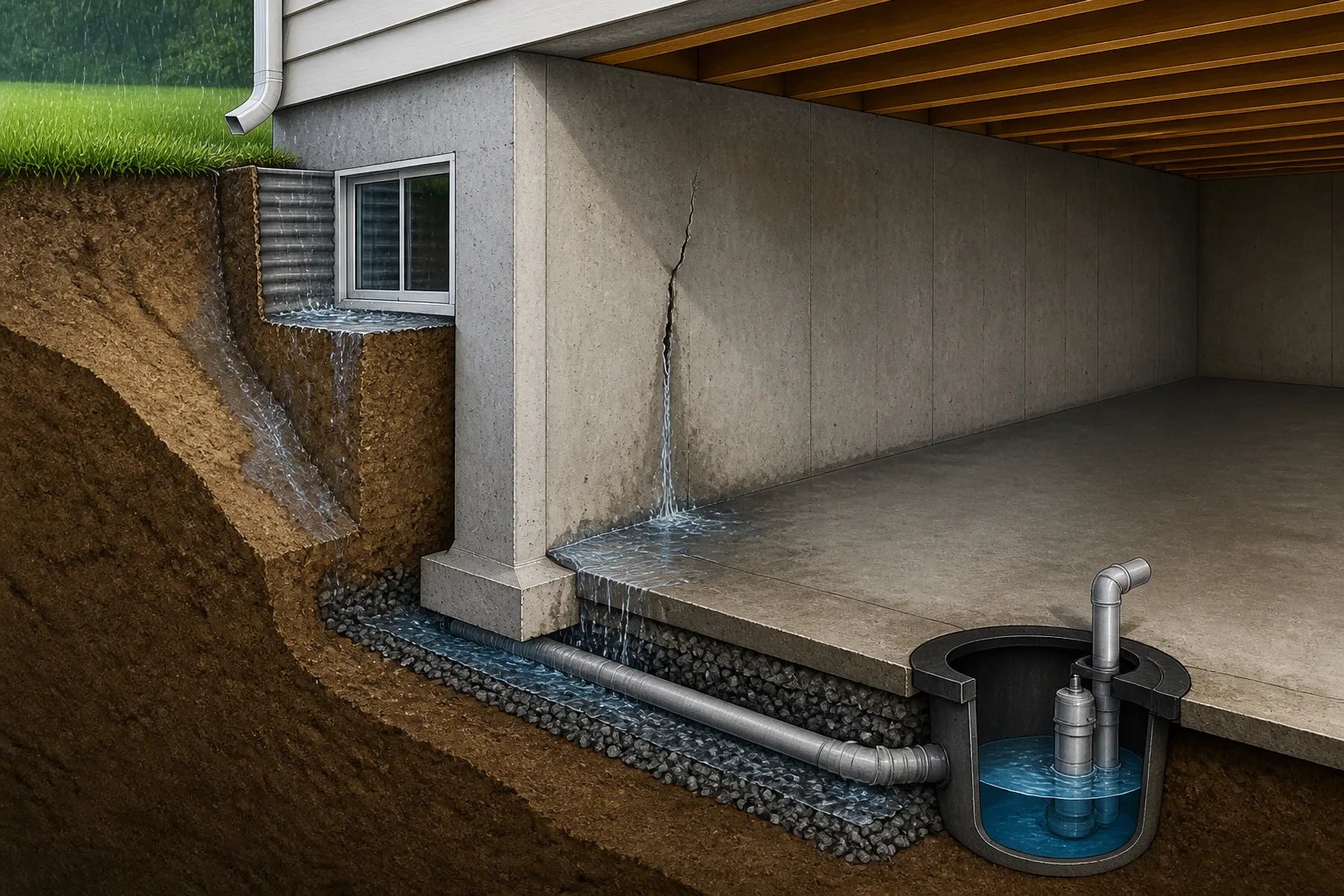
| What you notice | What it can indicate | What needs confirmation |
|---|---|---|
| Water through a wall or near a visible crack | A wall opening, crack, penetration, or water travelling behind finishes | The full path of water and whether additional drainage conditions contribute |
| Recurring water at the wall-floor edge | A wall-floor joint condition or foundation drainage concern | Whether interior collection, exterior access, drainage, or more than one measure is needed |
| Water below a basement window | Window-well drainage, runoff, well condition, or the window interface | The well drain and where it leads, plus nearby surface-water conditions |
| Wet basement after the sump runs or fails | A pump, discharge, backup, or drainage concern | Pump operation, accessible connections, and the route for collected water |
| Floor drain backup or wastewater odour | Possible sewer reverse flow or drain problem | The sewer-side condition and whether a backwater valve is relevant |
A sump pump and a backwater valve are not interchangeable. A sump pump receives collected foundation drainage, while a backwater valve is intended to address reverse flow from the municipal wastewater sewer. Our guide to sump pumps versus backwater valves explains this distinction in more detail.
Important distinction
A wet basement can have more than one water route
Foundation seepage, window entry, pump trouble, and sewer reverse flow can occur during the same weather event, but no one device or repair method addresses all of them. The proposed scope should identify which route it is designed to manage.
What a useful leak assessment should clarify
An online photo can show a symptom, but it cannot confirm concealed water travel, a buried connection, structural condition, or every access limitation. A useful on-site assessment connects what is visible indoors with accessible exterior conditions and existing drainage or pump equipment.
Before authorizing repair work, seek clear answers to these questions:
- Where did water first appear, and what evidence supports the proposed route?
- Which findings are confirmed, and which remain assumptions that need further investigation?
- What interior opening or exterior excavation is required to access the work?
- Where will collected water discharge, and how will that destination be confirmed?
- What finishes, paving, landscaping, or built-ins could be disturbed, and who is responsible for restoration?
- Which permits, inspections, utility locates, or municipal confirmations apply to the actual scope?
We offer a basement flood-prevention assessment when the necessary repair or device is not yet clear. The assessment is designed to separate confirmed conditions, likely contributors, and items that need further testing rather than assuming one visible defect explains the entire event.
Prepare useful information before an assessment
Clear observations make it easier to investigate the water route without asking you to diagnose the problem yourself.
Before an assessment
What to record about a basement leak
Bring observations and records, not a self-diagnosis.
- Photograph the first visible water, staining, crack, window, or floor edge when it is safe to do so.
- Note the date, rainfall or thaw conditions, duration, and whether water appeared during plumbing use or a power interruption.
- Mark whether the basement is finished and identify flooring, walls, cabinets, or stored contents near the affected area.
- List existing sump equipment, alarms, drainage components, prior repairs, and any change in performance.
- Gather available permits, invoices, product information, and municipal or regional records.
- Note exterior conditions such as roof-water discharge, pooling, window wells, paving, and areas where runoff collects.
Plan for access, permits, and restoration
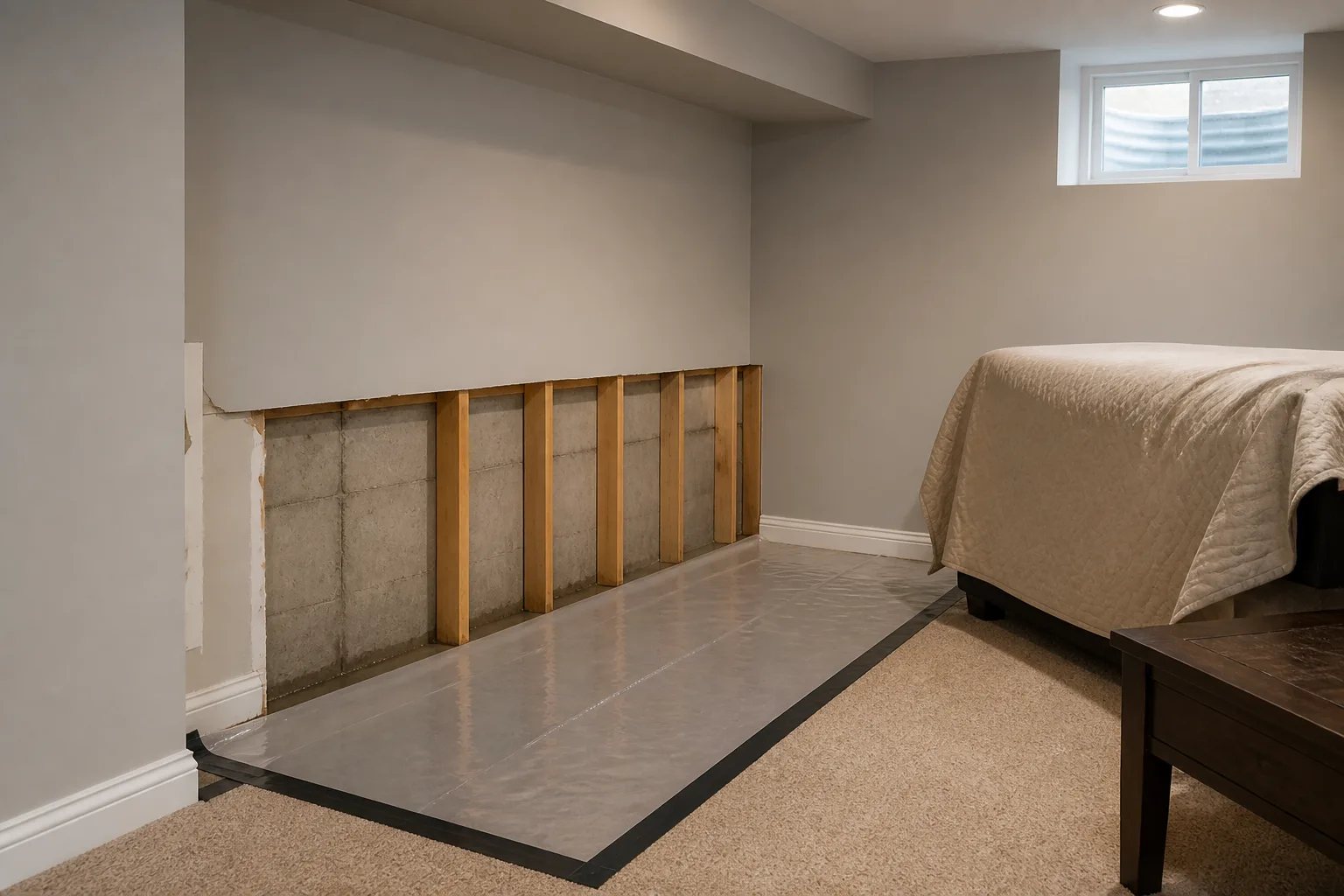
Repair access can affect both the scope and the final cost. In a finished basement, drywall, insulation, flooring, cabinetry, and baseboards can conceal the first wet point. Exterior work can affect soil, gardens, walkways, decks, driveways, fences, or equipment near the foundation. A proposal should state what access is assumed and which restoration work is included or excluded.
In Oakville, permit requirements depend on the actual work. The Town identifies sump-pump work and weeping-tile repairs or changes on properties in the Foundation Drainage Collection System area among work that can require a permit. Shoring and excavation, sewer-system work, and site servicing can also have approval requirements. Confirm the current requirements for the address and planned scope before work begins, especially before closing work that may need inspection.
Halton flood-prevention subsidies are measure-specific and are not automatic for general wet basement repair. If a proposed measure could be eligible, review our Oakville basement flooding rebates and subsidies guide and verify current official requirements before relying on funding. Keep assessment findings, permits, inspection records, photographs, proposals, paid invoices, and product information with the property file.
Choose a repair based on the confirmed route
Wet basement repair can involve a targeted crack or wall repair, an interior collection system, exterior waterproofing, drainage correction, window well work, sump equipment, or a coordinated scope. The appropriate approach follows the route, access conditions, discharge plan, and extent of the affected area. A small accessible defect and a perimeter drainage system should not be compared as though they are the same repair.
The key takeaway is simple: document the symptom, identify the timing, and let the proposed work follow evidence from the property. That approach produces a clearer scope, a more useful estimate, and fewer assumptions about what is happening behind finishes or below grade.
Helpful answers
Frequently Asked Questions
Get clarity on the water route
Tell us where water appears, when it happens, and what drainage or pump equipment is already present so we can determine the appropriate next step.