
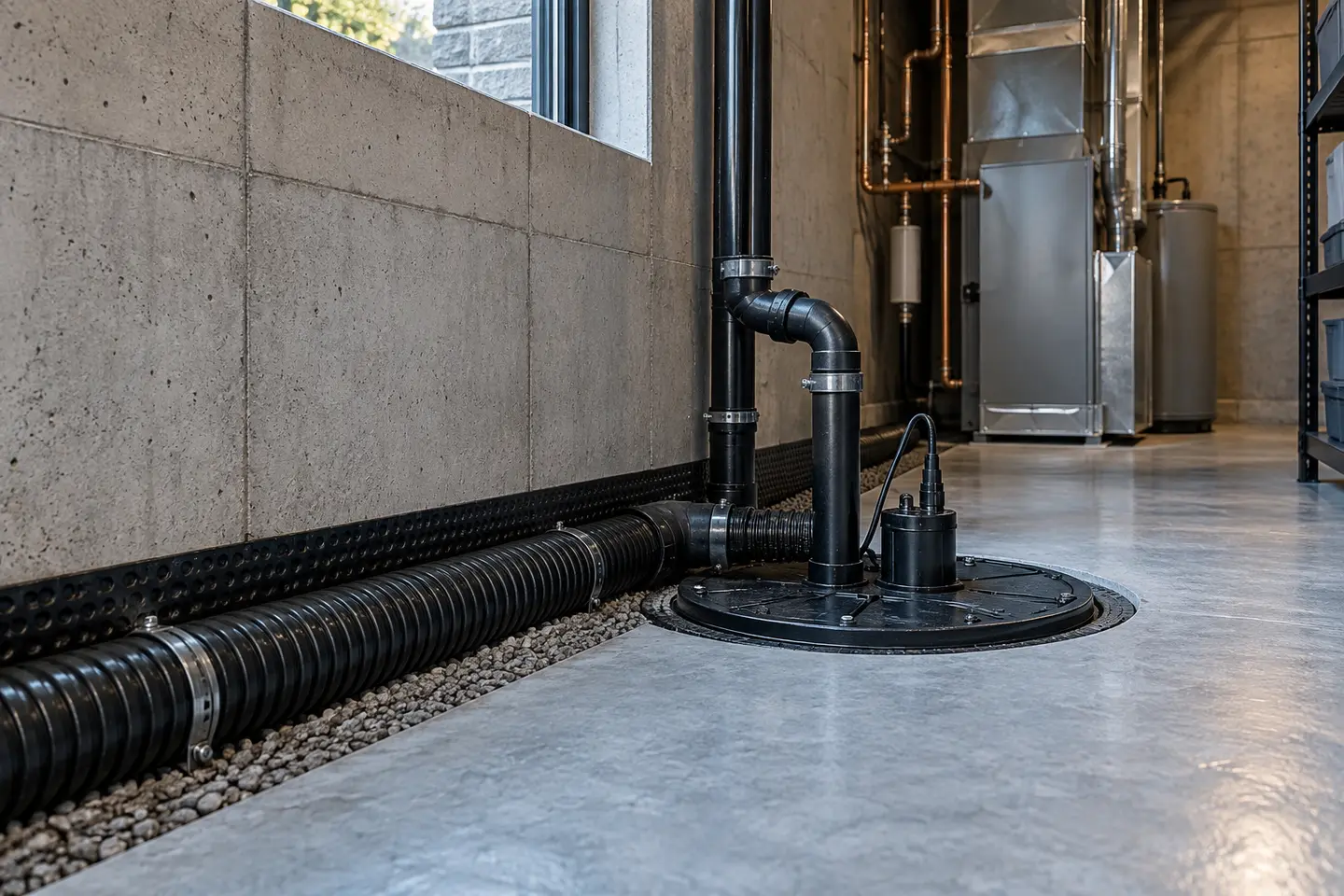
Learn why a sump pump manages foundation water while a backwater valve addresses wastewater reverse flow, and why some homes consider both.
Basement-water decisions are easier when the route, system and administrative requirements are separated. This guide explains the planning framework and the questions that still require property-specific confirmation. It does not diagnose a house from a description or replace the current Town of Oakville and Halton Region information.
Two different water routes
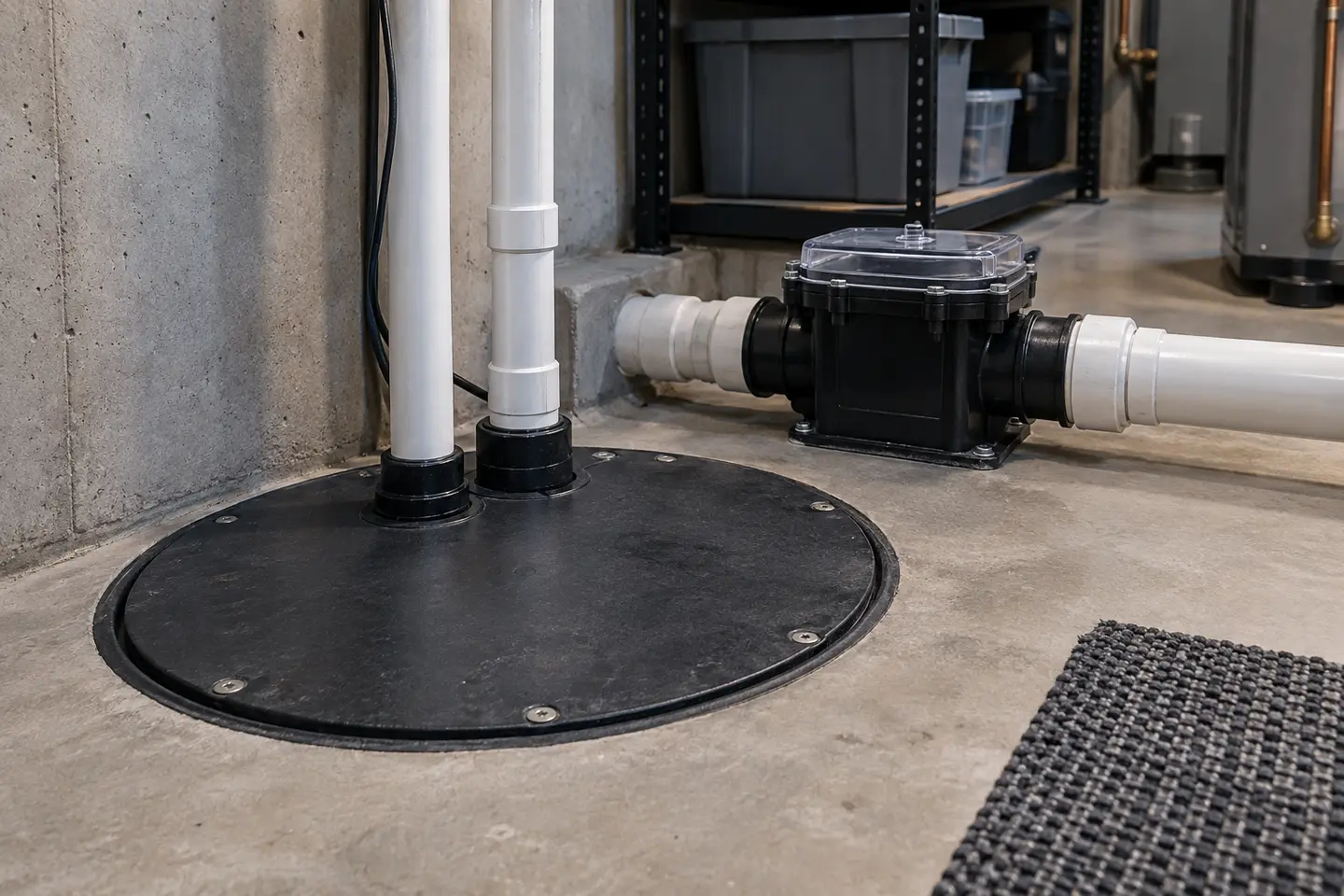
A sump pump and backwater valve sit in different water routes. The sump pump lifts collected foundation water from a pit to an approved discharge. The backwater valve sits in the private wastewater lateral and closes when flow tries to reverse toward the house. A pump does not block wastewater, and a valve does not drain a wet foundation wall.
Start by identifying whether the event involved clear seepage at a wall or joint, rising water in a sump, or wastewater at a floor drain, toilet or lower plumbing fixture. More than one route can occur during the same storm. Treating all basement water as one problem can lead to a well-installed device being blamed for a condition it was never designed to control.
What a sump pump does
A sump receives water from a connected foundation-drain or interior collection system and turns on when the pit reaches a set level. Selection depends on expected inflow, lift, pipe size, check valve, discharge route and service access. A larger motor is not automatically better if the pit, pipe or outlet cannot support the resulting cycle and flow.
The assessment should document where water enters the pit, where the discharge leaves the property and whether the outlet can freeze or return water toward the foundation. Existing pumps need operational testing and inspection of accessible components. The dry appearance of a pit on one day does not establish performance during a sustained storm or power interruption.
What a backwater valve does
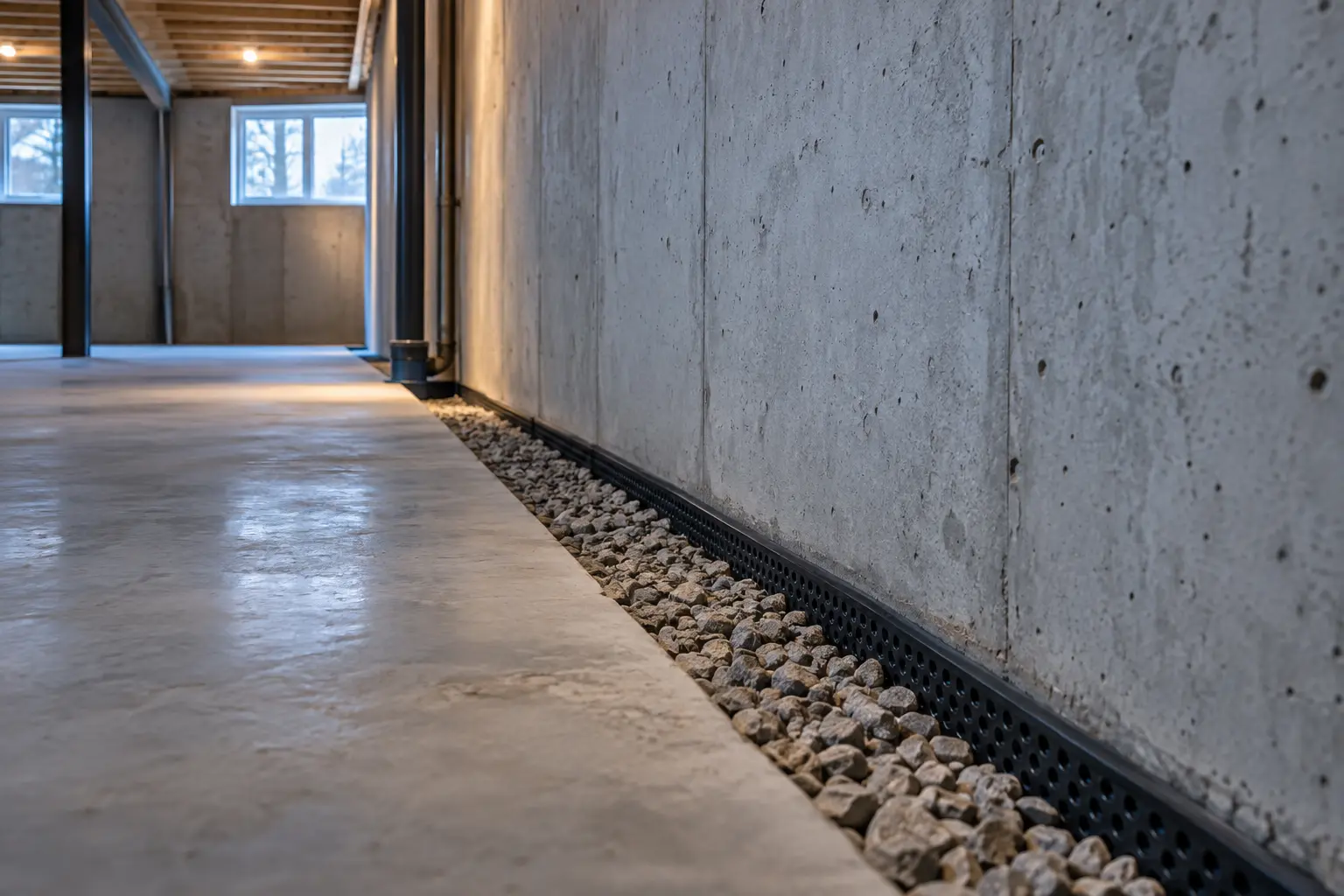
A backwater valve is installed in the private wastewater lateral at a suitable interior location. Under normal flow the valve allows wastewater to leave; during reverse flow its gate closes. Location, branch arrangement, slope and accessibility matter, and plumbing review is needed to determine suitability. The cover must remain reachable for inspection and cleaning after the floor is restored.
When the valve closes, fixtures upstream should not be used because wastewater from the house has no normal exit. A valve can also require a building or plumbing permit and final inspection. It is not a set-and-forget device, and it cannot protect openings that are downstream of the valve or water entering through the foundation.
Power, alarms and maintenance
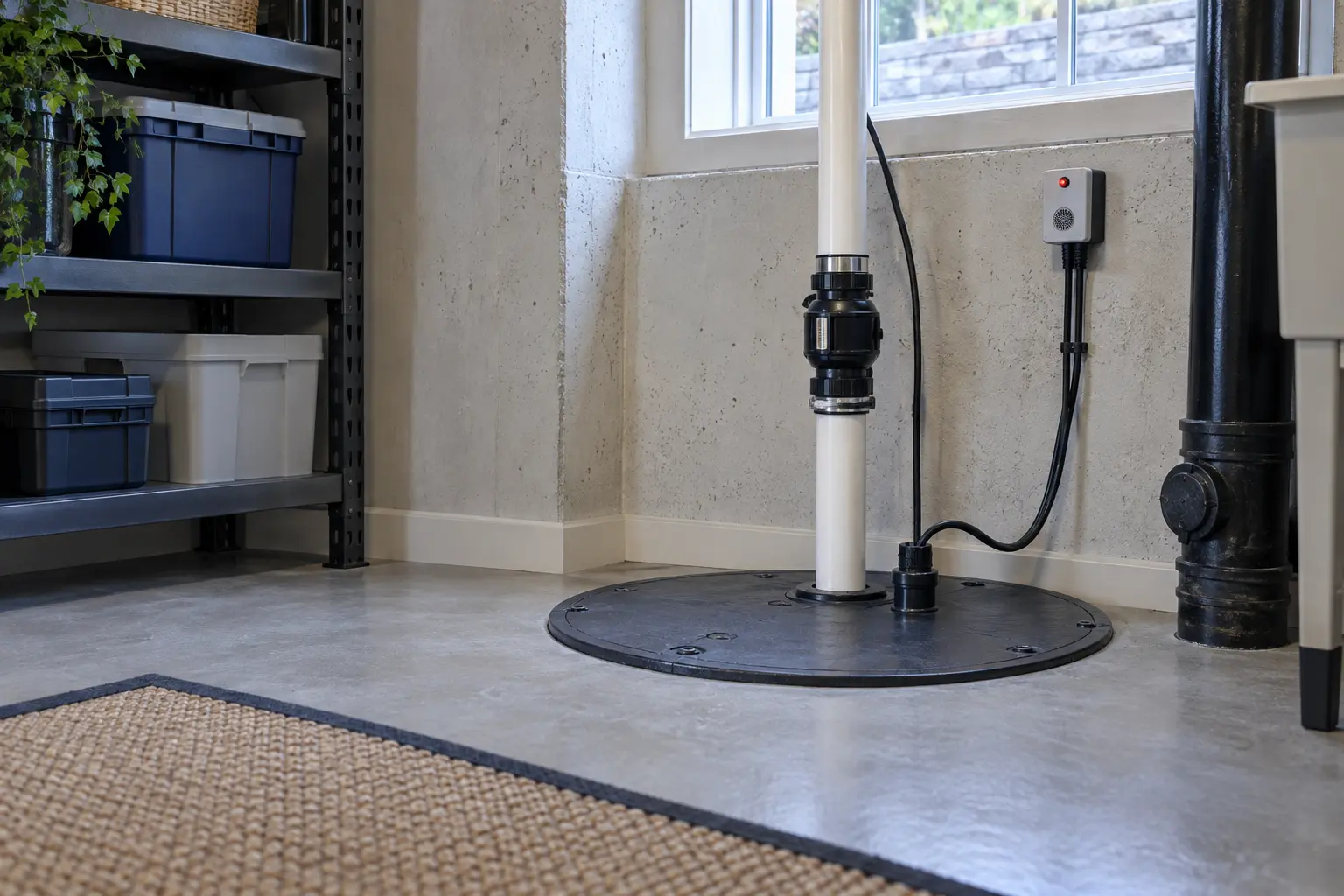
A primary sump pump relies on electrical power unless another power source is designed into the system. Battery backup can provide limited pumping during an outage or primary-pump problem, but run time depends on the battery, inflow and pump duty. Water-powered backup has different plumbing and suitability considerations. An alarm warns of a high level; it does not remove water by itself.
Maintenance should follow the installed product and include safe functional testing, cleaning accessible debris, checking the discharge and reviewing battery age or condition. Backwater-valve maintenance includes opening the accessible cover, inspecting the gate and seals and removing debris as appropriate. Record tests and leave enough working space for future replacement rather than boxing equipment behind permanent finishes.
Mixed flooding patterns
A storm can raise groundwater around the foundation while also increasing load on the wastewater system. One homeowner may see a sump running continuously and a neighbour may see a floor-drain backup; those are different clues. Within one house, clear water at a wall and contaminated water at a drain should be documented separately and handled with different safety precautions.
A property-wide assessment compares walls, joints, windows, surface runoff, foundation drainage, sump equipment, lower plumbing fixtures and the private lateral. If both devices are recommended, the proposal should state the independent purpose of each. Neither should be presented as redundant insurance for the other’s route.
Permits and Halton subsidies
Oakville permit requirements depend on the work and property. Backwater-valve plumbing, FDC-area sump or weeping-tile changes, sewer work and related construction should be confirmed with the Town before installation. Plan where inspection occurs and avoid concealing the valve, piping or sump connection before the required review.
Halton currently lists separate subsidies for qualifying backwater-valve installation and for eligible weeping-tile disconnection with sump installation. The percentages, caps, assessments, permit evidence and property conditions differ. Verify current forms before work and do not combine the two amounts or assume that approval for one measure establishes eligibility for the other.
Turn the guidance into a property-specific plan
A useful equipment plan includes failure behaviour. For a sump, ask what happens during loss of power, blocked discharge, pump failure or inflow beyond capacity and how the homeowner is alerted. For a backwater valve, ask what happens while the gate is closed, which fixtures are protected and how the cover is accessed. These are operating questions, not reasons to promise that a basement can never flood.
Record both systems on a simple maintenance calendar after installation. Include pump tests, battery or backup checks, alarm review, exterior-outlet inspection and valve cleaning or inspection according to product guidance. Keep model information, permit records and photographs with the schedule. If water returns, those records help distinguish a maintenance issue, changed site condition or separate route instead of assuming that the installed device failed.
When both measures are considered, request two separate acceptance checks. The sump check should confirm pump operation, controls, discharge and alarm or backup behaviour. The valve check should confirm normal gate movement, accessible maintenance and the protected plumbing arrangement. Keep the checks distinct so a successful pump test is never treated as evidence that the valve or wastewater route was reviewed.
What to document before requesting an assessment
- The first visible wet location and how the water spread
- Date, duration, rain, thaw, outage and plumbing conditions
- Visible cracks, windows, drains, pump equipment and alarms
- Finished areas or exterior features that limit access
- Earlier repairs, available permits and product information
- Questions about drainage destination, restoration and maintenance
Good notes do not require technical conclusions. Plain observations allow the assessor to compare several routes. Keep the original photographs and include a wider view so scale and location are clear. Do not create a safety risk to obtain a closer image.
Oakville and Halton checks
Check Oakville permit requirements against the actual work. The Town currently identifies FDC-area sump and weeping-tile work, shoring and excavation, sewer systems and site servicing among permit-triggering categories, while ordinary basement damp-proofing is listed differently. Halton subsidy measures have their own eligibility and documentation rules.
Review the current Town of Oakville permit guidance and Halton flood-prevention pages before construction or an application. Saved pages and old contractor material may show superseded amounts or requirements.
How to compare recommendations
Put each proposal beside the observed water route. Check whether it addresses one defect or a broader system, which side of the foundation it uses, where collected water goes, and what opening or excavation is required. Then compare restoration, permits, testing, maintenance and exclusions. A price comparison is only meaningful when those responsibilities are aligned.
Ask how unexpected concealed conditions will be handled. A proposal should identify the assumption, the evidence needed to change it, who can authorize additional work and how the price will be calculated. This protects the project from drifting after finishes are opened or buried drainage is exposed.
Maintenance after the work
Water-management components remain part of the home. Pumps should be tested according to their instructions; backup batteries and alarms need periodic review; valve access must remain clear; window wells and outlets should be kept free of debris; and changes in exterior grading or downspouts should not redirect water back toward the foundation.
Keep the final scope, approved changes, permits, inspection records, invoices, photographs and product information. Those records support maintenance and give a future assessor a clearer starting point if the water pattern changes.
Revisit the system after major exterior changes, basement renovations or equipment replacement. New paving, landscaping, additions, finished walls or altered drainage can change access and water movement. A later project should not disconnect, cover or redirect an installed component without confirming its purpose and destination.
Questions homeowners often ask
Can one photograph establish the repair?
No. It can show a visible condition but not the full concealed route, buried connections, structural stability or all access constraints.
Should I pick a system before an assessment?
Start with the symptom and desired outcome. The method should follow evidence from the property and a clear explanation of its limits.
Can two water problems happen in the same storm?
Yes. Foundation seepage, window entry, pump trouble and wastewater reverse flow can occur during the same weather event while requiring different measures.
Are official programs permanent?
No. Funding, eligibility, forms and program availability can change. Verify immediately before relying on a program.
Related Oakville resources
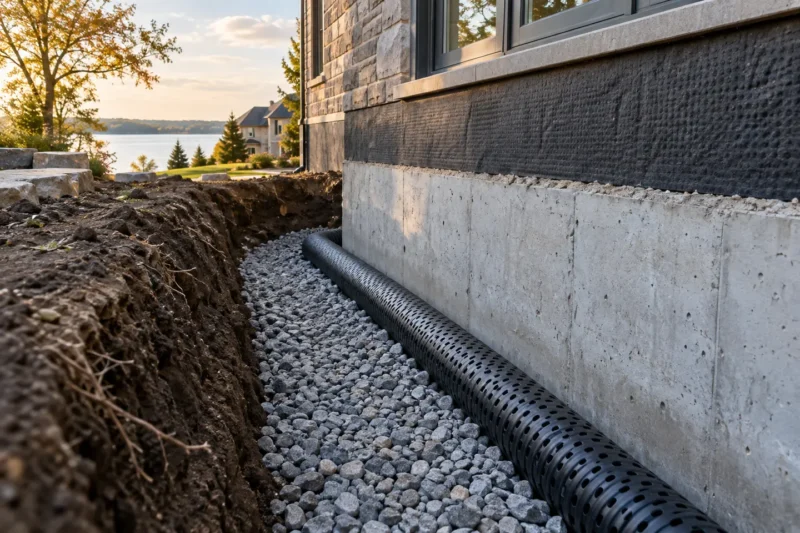
Sump vs Backwater Valve
A sump pump moves collected foundation water. A backwater valve closes against reverse flow in the wastewater lateral. They address different risks, and some homes may need…
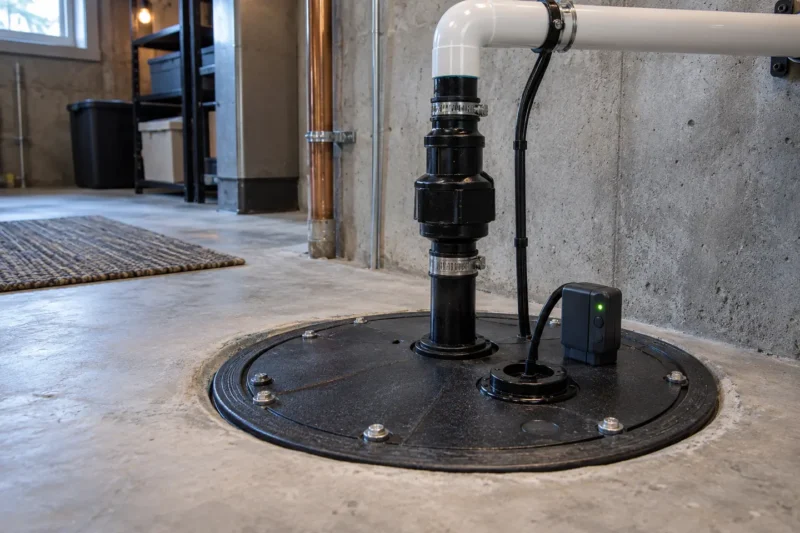
Sump Pump Installation
Oakville sump pump installation planned around a new sump pit and pump system for collected foundation drainage, access, drainage, permits and restoration.
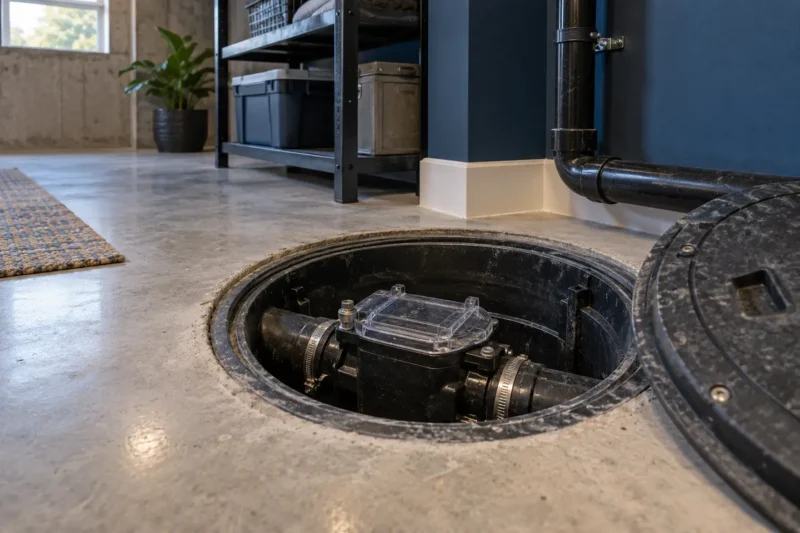
Backwater Valves
Oakville backwater valve installation planned around protection against reverse flow from the municipal wastewater sewer, access, drainage, permits and restoration.